
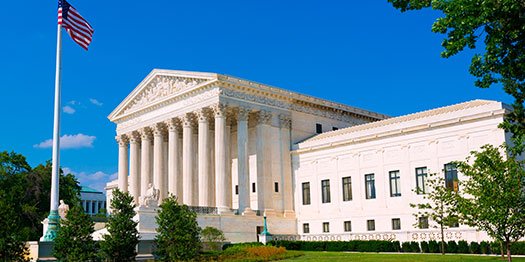
Although the media falsely brand the current Supreme Court as “conservative,” most of the justices who now occupy the bench have been notably reluctant to challenge Congress when it exceeds constitutional boundaries.
Learning Resources v. Trump, the court’s latest tariff decision, illustrates this pattern: The justices might have struck down the tariffs by voiding a defective congressional statute. Instead, they overrode the President’s accurate interpretation of it.
What Are Tariffs?
An important threshold question in the case was this: Under the Constitution, are the President’s tariffs—which both regulate trade and raise revenue—classified as “taxes” or as “regulations of commerce?”
The President argued that they are regulations of commerce. And he was correct: Writings from the American Founding confirm that import duties that both regulate trade and raise money are, for constitutional purposes, classified as regulations of commerce. Justices Brett Kavanaugh and Clarence Thomas made this clear in their dissents.
The reason this question was important was because the President traced his tariff authority to a law passed by Congress called the International Emergency Economic Powers Act (IEEPA). That statute purported to give the President authority to “regulate . . . importation.” It did not purport to delegate authority to impose taxes.
But the matter shouldn’t end there. The Constitution grants to Congress, not to the President, power to “regulate commerce.” Like taxation, the regulation of commerce is a quintessentially legislative function. This raises the next question: Is IEEPA unconstitutional for delegating tariff authority to the President?
IEEPA Is Unconstitutional
The history of the American Founding shows that Congress may empower the President to impose, raise, or lower tariffs only in defined circumstances. It is Congress’s responsibility to carefully define those circumstances.
But carefully defining circumstances is precisely what IEEPA does not do. Instead, it authorizes the President to “regulate . . . importation” in “emergencies”—in circumstances where the President has virtually unlimited power to declare an “emergency.”
In my view, this wholesale delegation of legislative power to the President is screamingly unconstitutional.
IEEPA is typical of other congressional laws shifting huge swaths of legislative power to executive agencies. These are the measures that have created the undemocratic and largely-unaccountable federal administrative state.
A Lost Opportunity
Chief Justice John Roberts’ opinion for the court failed to question the statute’s constitutionality. Just as he saved Obamacare by classifying a mandate as a tax, he saved IEEPA by narrowing it. In essence, he ruled that IEEPA didn’t grant as much authority as it seemed to grant.
Still, there is reason to defend the court’s decision. This reason appears in Justice Kavanaugh’s dissent: “Neither the plaintiffs nor the Court,” he wrote, “has suggested that the numerous laws granting tariff power to the President violate the Constitution’s separation of powers.”
In other words, the constitutionality of IEEPA was not before the court because the lawyers for the plaintiffs didn’t raise the argument.
But why not? After all, lawyers have an ethical obligation to press all tenable arguments that help their clients. Why did they abandon this one?
Perhaps they recognized that the current justices are reluctant to challenge Congress, even when its behavior seems clearly unconstitutional. Or perhaps their clients favor delegation of vast power to Presidents in general—just not to this particular President.
Whatever the reason, Americans who favor returning Congress to constitutional limits lost an opportunity: There should have been a intervenor in this case to challenge IEEPA’s constitutionality.
Thus, Learning Resources v. Trump was a lost opportunity to begin the process of nudging Congress back into its constitutional cage—and to remind Congress that it is responsible for legislative decision making. It has no right to shunt that responsibility to the President or to anyone else.