About Rob
Professor Robert G. Natelson is a constitutional scholar and author whose published research has been cited
repeatedly by justices and parties at the U.S. Supreme Court, as well as by federal
appeals courts, and by at least 18 state supreme courts.
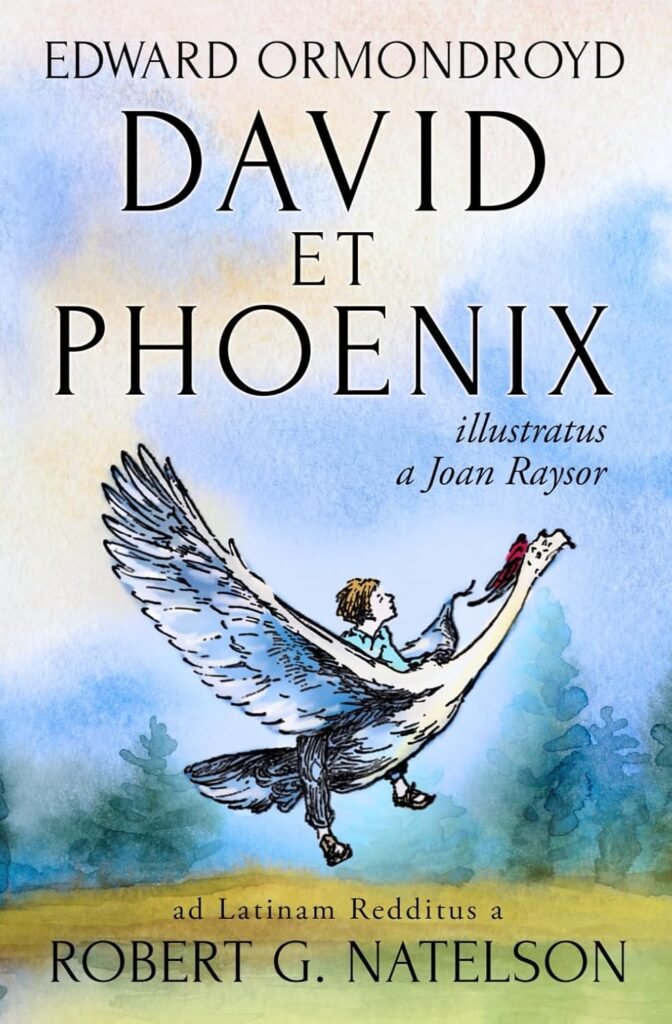
Rob’s experience includes conducting and publishing research, education, outdoorsmanship, grass-roots activism, commercial talk radio, small business, initiative and referendum, political campaign management, journalism, and the teaching and practice of several fields of law. He also translated into Latin the beloved children’s classic, Edward Ormondroyd’s David and the Phoenix.

Background
Rob grew up on the Revolutionary War town of Stony Point, New York, which helps explain his interest in the American Founding. Unlike most constitutional writers, he had the advantage of a decade-long experience in the full-time practice of law—focusing on updated versions of the same subjects addressed by leading American Founders in their own law practices: real estate, commercial law, wills and estates.
Another unusual advantage is proficiency in Latin (certified at the PhD level by the University of Colorado), the Founders’ second language. Still another is experience in small business.
Rob was a law professor for 25 years. He has been married to his wife Betty since 1981, and they have three daughters, two sons-in-law, and five grandchildren. For recreation he spends time in the great outdoors, where he enjoys skiing and hiking. He also likes travel, science fiction, and opera, and is active in the Denver Lyric Opera Guild.
Rob’s Constitutional Scholarship
Rob’s constitutional scholarship has been cited repeatedly by justices and parties at the U.S. Supreme Court—as well as by federal appeals courts, and at least 18 state supreme courts. (See details below.)
Rob’s research into the Constitution’s original meaning has carried him to libraries throughout the United States and in Britain, including four months at Oxford University. His books and articles span many different parts of the Constitution, including groundbreaking studies of the Necessary and Proper Clause, the Indian Commerce Clause, federalism, Founding-Era interpretation, regulation of elections, and the amendment process of Article V. He created the first-ever online bibliography for 18th century materials used in constitutional research. He is a contributing author to the Encyclopedia of the Supreme Court of the United States (on Magna Carta). He contributed eight essays to the third edition of the Heritage Guide to the Constitution: five on the amendment procedure and one each on the Guarantee Clause, the Postal Clause, and the Recess Appointments Clause.
U.S. Supreme Court justices have relied explicitly on Rob’s research in 41 citations in 13 separate cases. They are:
- Ellingburg v. United States, ___ U.S. ___, ___ (2026) (Thomas & Gorsuch JJ., concurring)
- Learning Resources v. Trump, ___ U.S. ___, ___ (2026) (Thomas, J., dissenting)
- Sackett v. Environmental Protection Agency, 598 U.S. 651 (2023) (Thomas & Gorsuch, JJ., concurring)
- United States v. Vaello Madero, 596 U.S. 159, 170 (2022) (Thomas, J., concurring)
- Espinoza v. Montana Dep’t of Revenue, 591 U.S. 464, 501 (2020) (Alito, J., concurring)
- Haaland v. Brackeen, 599 U.S. 255, 338 (2023) (Thomas, J., dissenting)
- Health and Hospital Corp. of Marion Co. v. Talevski, 599 U.S. 166, 208 (2023) (Thomas, dissenting)
- Arizona State Legislature v. Arizona Independent Redistricting Comm’n, 576 U.S. 787, 836 (2015) (Roberts, C.J., dissenting)
- National Labor Relations Board v. Noel Canning, 573 U.S. 513, 576 (2014) (Scalia, J., concurring)
- Town of Greece v. Galloway, 572 U.S. 565, 605-05 (2014) (Thomas, J., concurring)
- Arizona v. Inter Tribal Council of Arizona, Inc., 570 U.S. 1, 30 (2013) (Thomas, J., dissenting)
- Adoptive Couple v. Baby Girl, 570 U.S. 637, 658-59 & passim (2013) (Thomas, J., concurring).
- Upstate Citizens for Equality v. United States, 583 U.S. 1004 (2017) (Thomas, J. dissenting from denial of certiorari).
In addition, he was the principal author of an amicus brief cited by Justice Elena Kagan in Chiafalo v. Washington, 591 U.S. 578, 592 (2020) (op. for court). He also has been cited on constitutional and non-constitutional subjects in these federal appeals court cases:
- By Justice (then Judge) Gorsuch in Kerr v. Hickenlooper, 754 F.3d 1156,1195 (10th Cir. 2014) (dissenting)
- United States v. Abbott, 110 F.4d 700, 759 (5th Cir. 2024) (Douglas, J., dissenting)
- Koch v. Village of Heartland, 73 F.4th 747, 752 (2022 (op. for court, St. Eve, J.)
- United States Telecom Ass’n v. Federal Communications Comm’n, 855 F.3d 381, 414 (D.C. Cir. 2017) (Srinivasan J., concurring)
- Upstate Citizens for Equality v. United States, 841 F.3d 556, 568 (2d Cir. 2016) (op. for court, Carney, J.)
- Berlin v. Renaissance Rental Partners, 723 F.3d 119 (2d Cir. 2013) (Jacobs, C.J., dissenting)
- CREW v. Trump, 939 F.3d , 131, 162 (2d Cir. 2019) (Walker, J., dissenting)
- Mi Familia Vota v. Fontes, 129 F.4th 691, 737 (2025) (Bumatay, J., dissenting)
- Woolard v. Thurmond, — F.4th —- 2025 WL 4662285 (2026) (Van Dyke, J., dissenting)
Rob’s work also has been cited by—
- the highest state courts in Alabama, Alaska, California, Indiana, Iowa, Kansas, Maine, Maryland, Montana, New Hampshire, New Jersey, New Mexico, North Carolina, Oregon, Pennsylvania, Tennessee, Vermont, and Washington;
- the highest court of the Commonwealth of Puerto Rico;
- intermediate state appellate courts in Oregon and Washington; and
- U.S. District Courts in Colorado, Maine, Nevada, and Wisconsin.
He is a principal author of several Supreme Court briefs submitted to the U.S. Supreme Court, the U.S. Court of Appeals for the Tenth Circuit, and the Colorado and Montana Supreme Courts.
Other Scholarship
In addition to his work on U.S. constitutional issues:
- in conjunction with his eldest daughter Rebecca, he edited the first complete Internet versions of the Emperor Justinian’s great Roman law collection (in Latin);
- he has published widely on property law, legal history, legal remedies, and the initiative and referendum process; and
- he has published extensive historical and legal research on the Montana state constitution, and in 2008 he created the database the Documentary History of the Ratification of the Montana Constitution. In 2026, he expanded the database to include material from before and during the drafting of the constitution, and greatly expanded the ratification-era material and made it more readily word-searchable. You can find it here.
- In 2024, he translated into Latin the beloved children’s classic, David and the Phoenix.
He is a member of the Board of Scholars of the American Legislative Exchange Council. He formerly served as a senior advisor to the Convention of States Project and as Senior Fellow at the Initiative and Referendum Institute.
The Popular Market
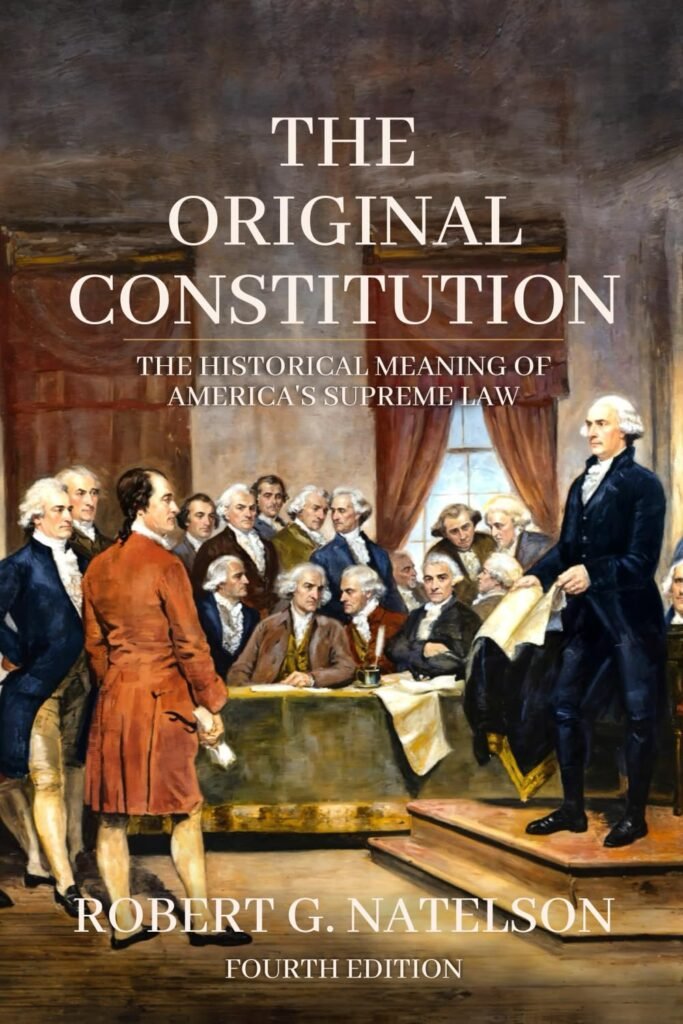
For the popular market, Rob authored the highly influential Article V Handbook for state lawmakers and the popular book, The Original Constitution: What It Actually Said and Meant (4th ed.) His contributions have appeared such national outlets as the Washington Post, Washington Times, Economist, Law & Liberty, Civitas Outlook, the Epoch Times, the American Spectator, the Wall Street Journal, Barron’s, the Daily Caller, Townhall.com, The Hill, and CNSNews.
Activities in Colorado and Montana
Rob has split most of his adult life between Colorado and Montana. His writings have appeared in most major news outlets in Colorado and in all major news outlets in Montana, and he regularly makes personal and media appearances in both states. His professional offices are in Colorado, as is his law license.
When serving as a Montana law professor, Rob not only produced scholarship. He also created and hosted the state’s first statewide commercial radio talk show . . . became the state’s best known political activist . . . led victorious ballot-issue campaigns, including the most successful petition-referendum drive in the state’s history . . . and helped pass landmark state legislation. In the 2000 open primary elections, he placed second among five candidates for Governor of Montana.
After running for office, Rob began the long series of constitutional articles that brought him national recognition. In 2010, he left academia to work full time with the Independence Institute in Colorado, where he has continued the constitutional series.