
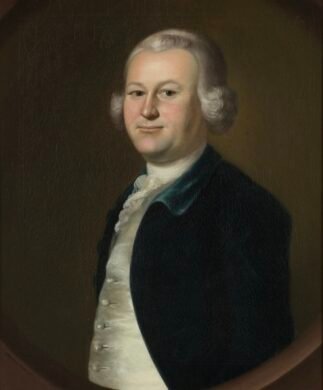
The 1768 Massachusetts Circular Letter: A Forerunner to the Constitution
This letter anticipated important aspects of the Constitution, written two decades later.
The 1768 Massachusetts Circular Letter: A Forerunner to the Constitution Read More »
This letter anticipated important aspects of the Constitution, written two decades later.
The 1768 Massachusetts Circular Letter: A Forerunner to the Constitution Read More »
I recently came across one of those silly websites in which a writer largely ignorant of the Constitution’s background purports
The Founders Pointed to Article V as a Cure for Federal Abuse Read More »
The state legislative power to issue binding applications for an amendments convention derives either directly from the Constitution (Article V) or from authority retained (“reserved”) by the states under the Tenth Amendment. Which is it?
A lot hinges on the question. One thing that does is the legal validity of the “Compact for America” approach. The […]
Article V of the Constitution states that “The Congress . . . on Applications of the Legislatures of two thirds of the several States, shall call a Convention for proposing Amendments.”
As I pointed out in my book, The Original Constitution: What It Actually Said and Meant, 18th century writers were imbued heavily with Latin language […]
What is an Amendments Convention “Application?” What is a “Call?” Read More »
Note: This is Part I of a six-part series I wrote on Amendment Conventions for the Washington Post’s “Volokh Conspiracy,” a leading constitutional law website. Links have not been reproduced, because all supporting information is on this website and can be found with by word search.
Part I: How Past Conventions Inspired the Constitution’s “Convention for […]
The Impending “Convention for Proposing Amendments” – Part I Read More »
Note: This column appeared originally at the American Thinker.
In a recent post, I examined suggestions that a convention of the states for proposing amendments adopt a supermajority rule for proposing any amendment. Most commonly suggested is that the convention replace the traditional “majority of states decides” standard with a two thirds requirement.
I explained that this […]
Answering Questions About the Voting Rules at a Convention for Proposing Amendments Read More »
Note: This article first appeared on the American Thinker website.
In the Anglo-American constitutional tradition, a “convention” can mean a contract, but the word is more often applied to an assembly, other than a legislature, convened to address ad hoc political problems. The “Convention for proposing Amendments” authorized by Article V of the Constitution is designed […]
How A Famous English Convention Clarifies the Role of a Convention of States Read More »
This article first appeared in the American Thinker.
Term limits are among the reforms being proposed by advocates of curbing federal government abuses through the Constitution’s Article V amendment process.
The idea of congressional term limits has been around for some time. But more recent discussion centers on term limits for the judiciary, especially for the Supreme […]
Term Limits for the Supreme Court? Read More »
This article was first published on CNS News.
A newly published speech by one of our Framers offers important clues to the constitutional role of the states, of the right to keep and bear arms, and of the amendment process.
Charles Carroll of Carrollton represented Maryland at the Constitutional Convention. After the convention was over, he advocated […]
Wisdom From A Framer on Federalism, Guns, and the Amendment Process Read More »
In my last post, I discussed the effect on Colorado’s Taxpayer’s Bill of Rights (TABOR) of the Supreme Court’s ruling in Arizona State Legislature v. Arizona Independent Redistricting Comm’n. In this post, I explain why the Arizona case was decided correctly.
Some people may be surprised that I think the holding was correct. I’m politically conservative […]
In a recent post, I pointed out that, despite superficial appearances, the Constitution’s Necessary and Proper Clause—clarifying that Congress has authority to make laws “necessary and proper” to carrying out its other enumerated powers—actually grants Congress no power.
The Necessary and Proper Clause is representative of one of four related kinds of provisions found in 18th […]
The Necessary and Proper Clause Grants Congress No Power Read More »